




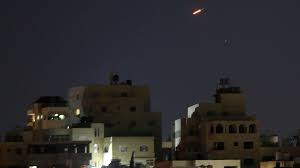
Iran and Israel exchanged direct military strikes on Monday for the first time since a fragile ceasefire halted five weeks of conflict, heightening concerns that the region could slide back into a full-scale war.
Iran launched a barrage of missiles at Israel overnight, prompting retaliatory strikes by Israel on military targets inside the Islamic Republic. The escalation came despite calls for restraint from United States President Donald Trump, a key ally of Israeli Prime Minister Benjamin Netanyahu.
The Iranian attacks followed Israeli strikes on targets linked to the Iran-backed Lebanese militant group Hezbollah in Beirut’s southern suburbs. Tehran had repeatedly warned that any attack on the Lebanese capital would trigger a response against Israel.
The renewed hostilities rattled global markets, with oil prices surging amid fears that the conflict could spread further and disrupt shipping through the strategic Strait of Hormuz, a vital artery for global energy supplies.
The developments also cast doubt on ongoing diplomatic efforts aimed at ending the conflict, including mediation initiatives involving Pakistan.
Speaking at a press conference in Tehran, Iranian Foreign Ministry spokesman Esmaeil Baqaei said it was “natural” for diplomatic efforts to be affected by the latest escalation. Moments later, a large explosion reportedly shook the area around the foreign ministry, followed by several blasts believed to be linked to air defence operations.
No casualties had been officially reported in either country as of Monday.
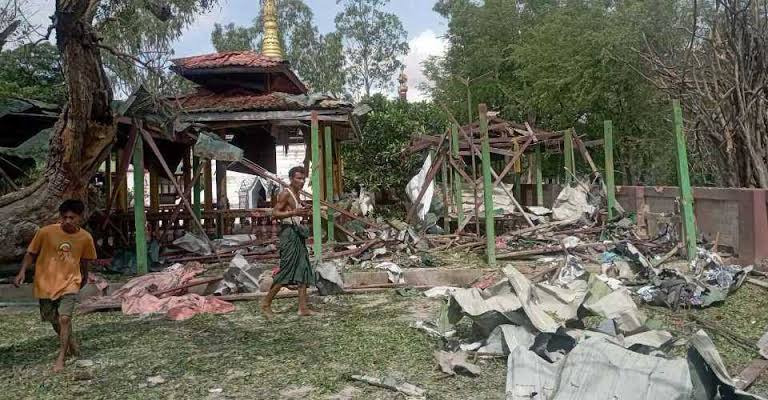
The Israeli military said it had targeted and dismantled Iranian air defence systems deployed across multiple locations. Residents in Jerusalem and the occupied West Bank city of Ramallah reported hearing explosions as Israeli forces intercepted additional incoming missiles.
Iran’s Revolutionary Guards said they had struck the Nevatim and Tel Nof air bases in Israel, as well as a petrochemical facility, describing the attacks as retaliation for an Israeli strike on a similar installation in southwestern Iran.
The Guards warned that Israel had initiated a “dangerous game” that could threaten energy infrastructure across the wider region.
Tehran also accused Washington of enabling the escalation. Baqaei said Israel would not undertake such actions without prior coordination with the United States, a claim Washington has not publicly endorsed.
Meanwhile, Yemen’s Iran-backed Houthi movement announced its first missile attack on Israel since April and declared a ban on Israeli-linked shipping in the Red Sea, raising further concerns over regional stability and maritime trade.
President Trump urged both sides to de-escalate tensions. In an interview with Fox News, he called on Iran to return to negotiations, saying the missile strikes should mark the end of the current exchange.
The U.S. president also emphasized his influence over the conflict, stating in an interview with the Financial Times that decisions on the matter ultimately rested with him rather than Netanyahu.
Diplomatic efforts continued over the weekend, with Pakistan’s Interior Minister Mohsin Naqvi travelling to Tehran to deliver what Iranian state media described as a special message to Iran’s Supreme Leader, Mojtaba Khamenei.
International leaders also appealed for calm. European Union foreign policy chief Kaja Kallas called on both parties to return to negotiations, while China urged restraint, warning that renewed hostilities were not in the interest of any side.
Iran has maintained that any comprehensive agreement to end the conflict must also address the parallel fighting in Lebanon, where Israel has continued military operations against Hezbollah.
The renewed violence pushed crude oil prices up by more than five percent, reflecting growing concerns about energy security and the future of shipping through the Strait of Hormuz.
Questions also remain over the leadership structure in Tehran, with Supreme Leader Mojtaba Khamenei yet to make a public appearance amid reports that he was injured during the conflict.
For many residents, the prolonged tensions continue to take a heavy toll on daily life, with rising prices and economic uncertainty compounding the effects of the conflict.