


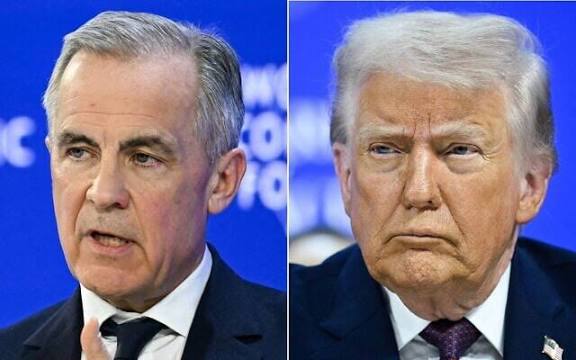





Canada has announced counter-tariffs ranging from 15 to 50 per cent on US goods, escalating the trade dispute between the two historically close allies.
The retaliatory measures will take effect on September 8, following the introduction of 50 per cent US tariffs on Canadian imports announced by President Donald Trump.
Canadian officials said the counter-tariffs would match US tariff levels and affect a range of industries, including steel, dairy, electronics and consumer goods.
Products on the list include fresh and frozen fish, dishwashers, washing machines and industrial goods such as railway construction materials.
The Canadian government also announced a $5.4 billion (CA$7.5 billion) support package for businesses and workers affected by the tariffs.
Finance Minister Francois-Philippe Champagne described the measures as an unprecedented challenge but said Canada would respond in a “proportionate, targeted and strategic way.”
Industry Minister Melanie Joly urged Canadians to support local businesses and said the government would seek stronger relationships with new allies and trading partners.
The latest US tariffs affect about $20 billion worth of Canadian goods, representing roughly 5.5 per cent of Canada’s exports to the United States, after trade negotiations failed to produce an agreement.
Under Canada’s response, US steel and aluminium products previously subject to a 25 per cent duty will face tariffs of up to 50 per cent. Other goods, including appliances, dairy products and certain steel and aluminium derivatives, will face 25 per cent tariffs.
The affected products account for about 7.3 per cent of Canada’s imports from the United States based on 2024 trade figures.
Trump has also threatened to double tariffs on Canadian automobiles from the current 25 per cent to as much as 50 per cent for non-US content starting next year.
Ontario Premier Doug Ford criticised the threat and warned that Canada could impose a surcharge on electricity exports to the United States.
Trump responded by threatening “far worse” consequences and referring to Canadian Prime Minister Mark Carney as a “governor”, renewing his calls for Canada to become the 51st US state.
The US president also said he was considering renaming Lake Ontario as “Lake America”, continuing his push to rename major geographic landmarks.
Oxford Economics estimated that Trump’s latest tariffs would raise the effective US tariff rate on Canadian exports from 5.1 per cent to 6.9 per cent, with plastics, electrical machinery, and wood and paper products contributing significantly to the increase.
The research firm said manufacturers in Quebec, New Brunswick and Ontario would be among those most affected.
Carney said over the weekend that US negotiators had sought last-minute restrictions on Canada’s trade agreements with other countries and had made unacceptable demands involving the French language and Quebec culture.
Trump rejected the accusation, saying he would “never interfere with Canadians speaking French” and accusing Carney of making false claims for political support.
The United States remains Canada’s largest trading partner, with Canadian exports to the country accounting for about 70 per cent of its total exports. Canada is also the second-largest US trading partner in goods this year, behind Mexico.
The escalation follows failed negotiations over US complaints about Canadian trade practices involving alcohol, automobiles and dairy products. Despite a delay in implementing the US measures, several days of talks failed to produce a new agreement.