





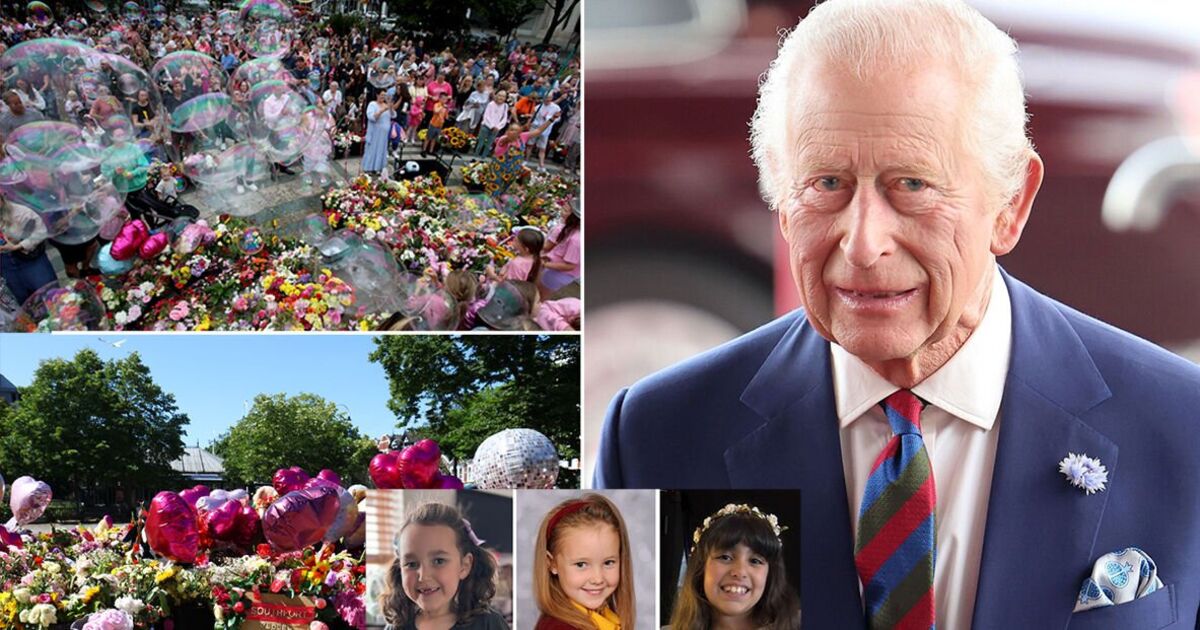
King Charles III visited Southport on Tuesday, the northwest England town where a recent knife attack claimed the lives of three young girls and triggered nationwide anti-immigration riots. The 75-year-old monarch paid his respects by inspecting a sea of floral tributes and met with children who survived the attack.
During his visit, Charles expressed gratitude to frontline emergency staff for their ongoing service to the community, according to Buckingham Palace. The king had faced criticism, including from historian Kate Williams, for his delayed response to the riots that erupted following the July 29 stabbing.
While Charles initially refrained from commenting on the unrest, consistent with the tradition of avoiding political controversy, he later expressed in conversations with Prime Minister Keir Starmer and police chiefs that he was “greatly encouraged” by the compassionate response of the community, which stood in contrast to the aggression and criminality of a few.
Footage captured the king waving to the public as he walked through Southport’s town centre. He was also scheduled to meet with regional leaders, emergency services, and local groups impacted by the violence that followed the tragedy.
Among those Charles met privately were families of the victims and surviving children from the attack. The assailant, Axel Rudakubana, a 17-year-old, has been charged with murder and attempted murder. Police have clarified that the incident is not being treated as terrorism-related.
In the wake of the attack, riots erupted in more than a dozen towns and cities across England, fueled by misinformation that Rudakubana was a Muslim asylum seeker. The authorities have blamed far-right elements for inciting the unrest, which targeted mosques, hotels housing asylum seekers, and police officers. Rudakubana, however, was born in Britain to Rwandan Christian parents.
The riots led to over a thousand arrests and hundreds of convictions. Prime Minister Starmer vowed that those involved would face swift justice. Charles, who had been receiving daily briefings during the height of the unrest, eventually praised the efforts of the police and emergency services in restoring peace and emphasized the importance of shared values of mutual respect and understanding to unite the nation.


