









By Ayomide Otitoju
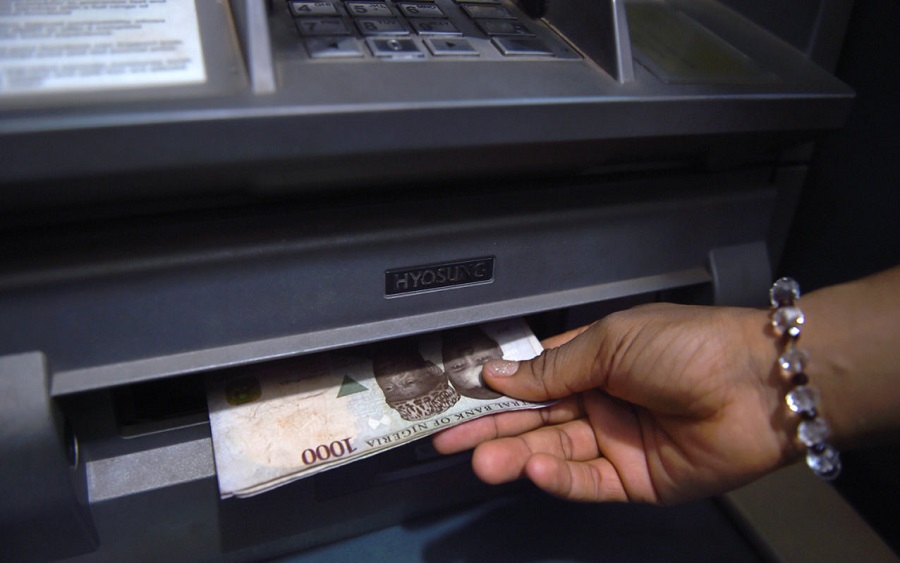
Nigerians continued to rely heavily on cash withdrawals in the first half of 2025, pulling ₦36.34 trillion from Automated Teller Machines (ATMs) between January and June — nearly three times the ₦12.21 trillion recorded in the same period last year, according to the Central Bank of Nigeria (CBN).
The surge persisted despite a revised fee structure introduced in March to discourage excessive cash use. The update removed the previous allowance of three free monthly withdrawals at other banks’ ATMs, increasing the cost of accessing cash. Under the new framework, customers now pay ₦100 for every ₦20,000 withdrawn at another bank’s ATM, with offsite ATMs attracting additional charges of up to ₦500 per transaction. The CBN said the review was intended to offset rising operational costs and improve ATM efficiency.
Data show ATM withdrawals rose steadily in the first half of 2025, with ₦15.97 trillion withdrawn in Q1 — nearly triple the ₦5.46 trillion recorded a year earlier. The momentum continued in Q2, with withdrawals totaling ₦20.36 trillion, up from ₦6.75 trillion in the same period in 2024. Monthly withdrawals climbed from ₦4.81 trillion in January to ₦7.44 trillion in May before easing slightly to ₦6.55 trillion in June.
The increase was not limited to value alone. Transaction volumes rose to 858.8 million in six months, up from 496.47 million in H1 2024 — a nearly 73 percent increase — suggesting that higher charges had little effect on how frequently Nigerians accessed cash.
The rise in ATM usage has drawn criticism from labour unions, consumer groups, and some industry stakeholders. The Trade Union Congress described the fee hike as exploitative, while the Socio-Economic Rights and Accountability Project has challenged the policy in court, arguing that it disproportionately affects low-income earners.
Some banking stakeholders defended the fee adjustment as necessary, though concerns remain about its timing amid broader economic pressures.
The persistent demand for cash contrasts with the growth of electronic payments, which continue to dominate in absolute value. Point-of-sale transactions rose to ₦147.2 trillion in H1 2025, but ATM withdrawals grew at a far faster pace.


