



By Ayomide Otitoju
The Presidency on Monday addressed the controversy surrounding the newly enacted tax reform laws scheduled to take effect on January 1, 2026, dismissing claims that the versions signed into law differ from those passed by the National Assembly.
The intervention followed calls by former Vice President Atiku Abubakar, Labour Party’s 2023 presidential candidate Peter Obi, and several civil society organisations for the suspension of the implementation of the laws.
The controversy was further fuelled by a member of the House of Representatives, Abdulsamad Dasuki, who raised concerns over alleged discrepancies between the tax bills approved by lawmakers and the versions later gazetted and made available to the public. Dasuki argued that the gazetted laws did not reflect what was debated and passed on the floor of the House, describing the situation as a breach of his legislative rights.
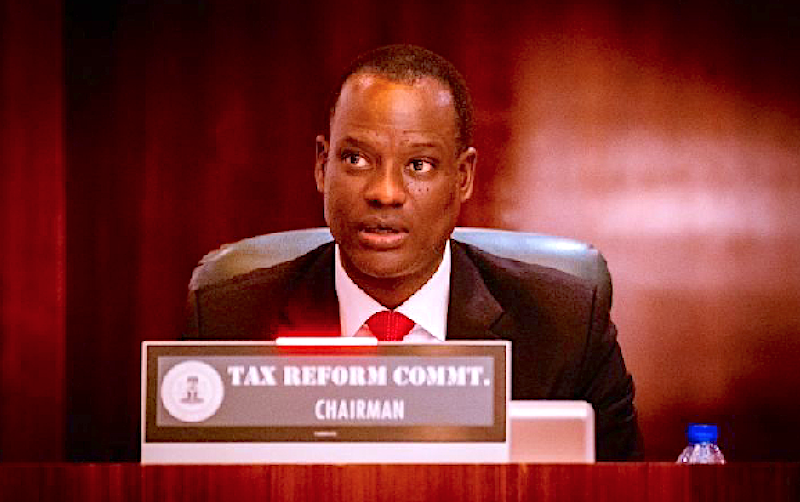
However, speaking on Channels Television’s Morning Brief, Chairman of the Presidential Fiscal Policy and Tax Reforms Committee, Taiwo Oyedele, described the circulating claims as false. He said there was no basis for comparison, as the officially harmonised bills certified by the Clerk of the National Assembly and transmitted to the President had not been made public.
“Before you can say there is a difference between what was gazetted and what was passed, we don’t have what was passed. The harmonised version certified by the clerk is what should be compared, and only the lawmakers can say authoritatively what was sent,” Oyedele said.
He added that even he did not possess the certified harmonised version, noting that he only had access to the documents presented to President Bola Tinubu for assent.
Oyedele also addressed concerns over a provision in Section 41(8), which reportedly required a 20 per cent deposit, stating that the clause appeared in an early draft but was not included in the final gazette. He explained that reports circulating in the media were based on draft documents and not on the outcome of any official investigation by the House of Representatives.
“What is out there in the media did not come from the committee set up by the House. We should allow them to carry out their investigation,” he said.
President Tinubu recently signed four tax reform bills into law, a move the Federal Government has described as the most significant overhaul of Nigeria’s tax system in decades. The reforms, which faced strong opposition from some northern lawmakers before their passage, are slated to come into effect on January 1, 2026.
The new laws include the Nigeria Tax Act, the Nigeria Tax Administration Act, the Nigeria Revenue Service (Establishment) Act, and the Joint Revenue Board (Establishment) Act, all to operate under a unified authority known as the Nigeria Revenue Service.
According to the Federal Government, the reforms are aimed at simplifying tax compliance, broadening the tax base, eliminating multiple taxation, and modernising revenue collection across federal, state and local governments.