






By Ayomide Otitoju
A regional programme transforming aquatic resource management and strengthening cross-border fish trade is improving the livelihoods of nearly three million people across Southern Africa, raising fish production, consumption and incomes.
The Program for Improving Fisheries Governance and Blue Economy Trade Corridors (PROFISHBLUE) has recorded cross-border trade volumes of more than 500,000 tonnes over the past four years, contributing to job creation, food security and climate resilience across 16 Southern African Development Community (SADC) member states.
Funded through a $9.2 million grant under the African Development Bank’s African Development Fund (ADF-15), the initiative has trained and equipped more than 250,000 beneficiaries in seven ADF countries—Democratic Republic of Congo, Madagascar, Malawi, Mozambique, Tanzania, Zambia and Zimbabwe. Support included technical training, knowledge-sharing programmes, fish quality assurance tools, and refrigerated transport vehicles.
Capacity-building covered fish value chain management, post-harvest utilisation, business development and SME incubation, genetic improvement of tilapia species, development of common standards in collaboration with national standards bureaus and customs officials, nutrition and fish product development, and blue economy investment planning.
The project also supported fish stock assessments in transboundary lakes, vessel monitoring systems to curb illegal fishing, and training in vessel inspection and catch data management.
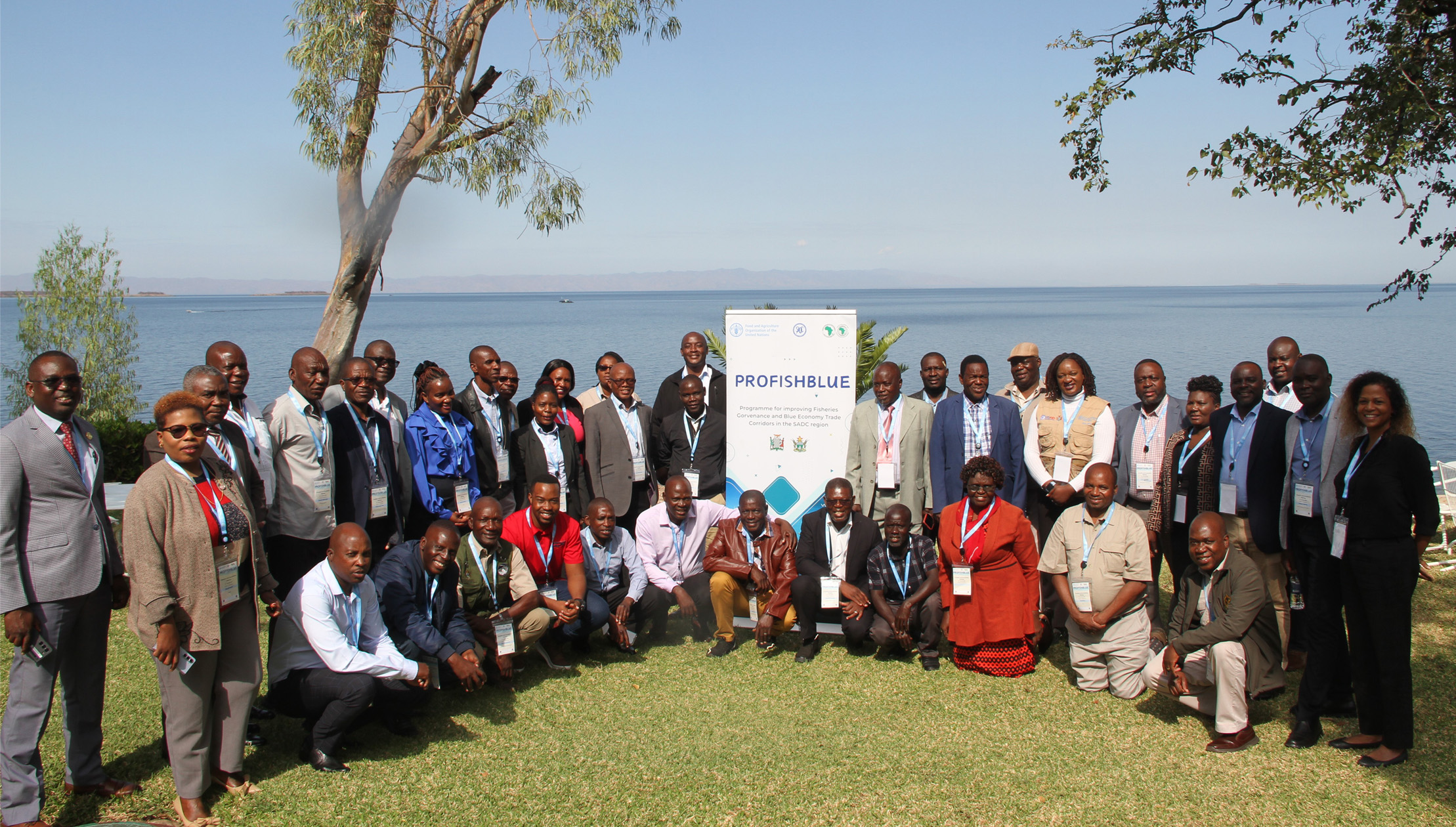
Stakeholders gathered in Gaborone on 21 November to mark World Fisheries Day and highlight the initiative’s successes since its launch in 2022. The event, convened by SADC, the African Development Bank Group and development partners, showcased how PROFISHBLUE is strengthening regional integration through improved fisheries governance and sustainable blue economy trade corridors.
Speaking on behalf of SADC Deputy Secretary for Regional Integration, Angele Makombo Ntumba, Director Domingos Gove said the project had demonstrated the region’s capacity to improve aquatic food systems for the benefit of more than 380 million people. “We are indebted to the African Development Bank Group for providing funding to implement this project within the Blue Economy space,” he said.
Neeraj Vij, the Bank’s Regional Sector Manager for Feed Africa Operations in Southern Africa, said the programme offers a model for integrating blue economy trade corridors and scaling cross-border fish trade. “Strategic investment in fisheries governance can create competitive value chains that provide jobs and livelihoods while combating extreme poverty, especially in rural areas,” he noted.
Key implementing partners include the Food and Agriculture Organization (FAO), the United Nations Industrial Development Organization (UNIDO), the Worldwide Fund for Nature (WWF), WorldFish and the African Organization for Standardization (ARSO).
Botswana’s Director of Fisheries and Apiculture in the Ministry of Lands and Agriculture, Kagisanyo Bedi, praised the platform for enabling regional learning and knowledge exchange.
Women in fisheries also shared testimonies of improved livelihoods, underscoring the programme’s inclusive approach. Tanzanian participant Hifadhi Hai commended the project for supporting innovation in seaweed farming, while Malawian processor Tamala Mtambo of the Twiyule Fish Cooperative said PROFISHBLUE had helped to “turn fish processing into progress.”