


By Ayomide Otitoju
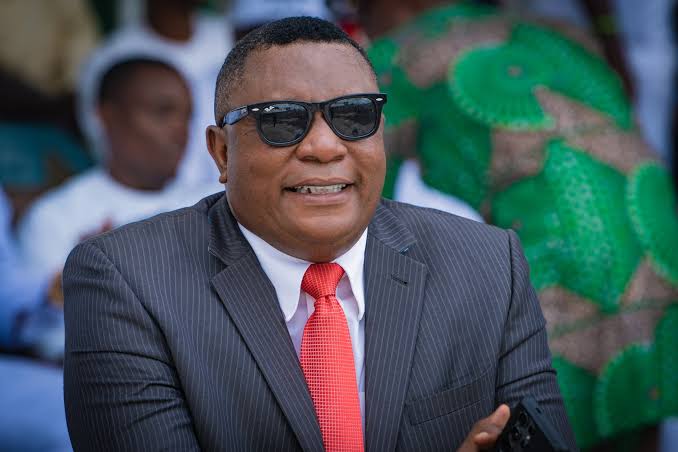
Lagos State Governor, Mr. Babajide Sanwo-Olu, has described Nigeria’s energy transition process as a critical step toward achieving energy security, noting that recent reforms granting states greater control over power generation and distribution will help address the country’s energy challenges.
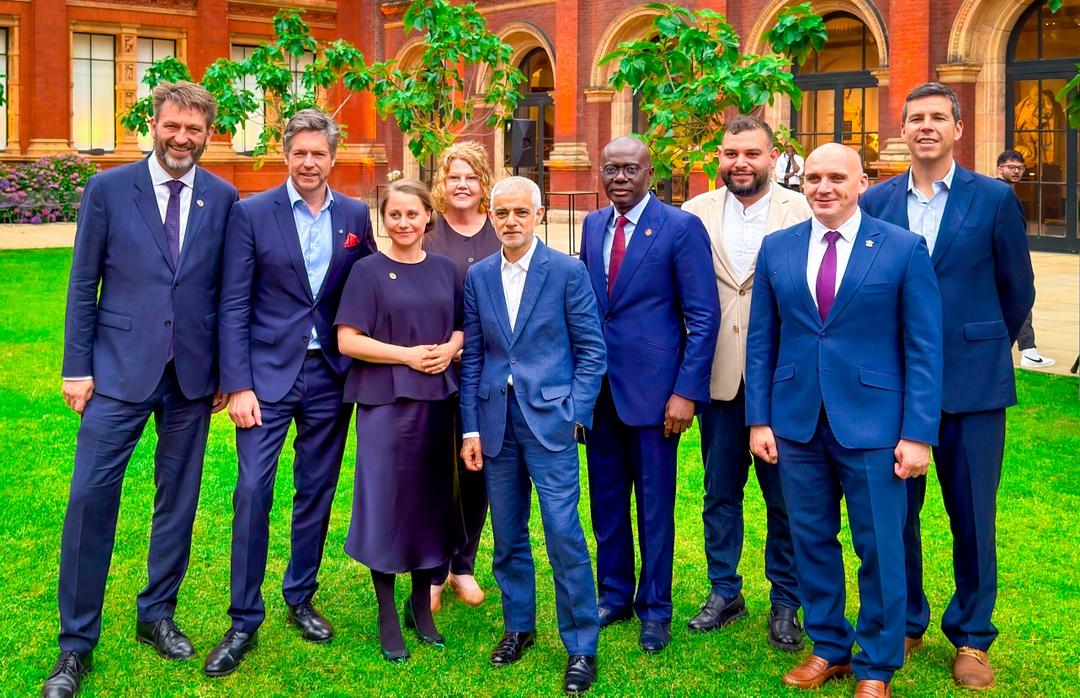
Sanwo-Olu made the remarks on Tuesday while speaking at the Under2 States and Regions Dialogue during the ongoing London Climate Summit. The session, titled “Advancing Energy Security in a Volatile World,” was organised by Bloomberg Philanthropies and the Under2 Coalition.
The governor said Lagos State is committed to tackling energy shortages through significant investments in the power sector and called for stronger partnerships to enhance electricity generation and distribution at the sub-national level.
According to him, the recent decentralisation of Nigeria’s power sector has opened new opportunities for states to participate across the energy value chain.
“I am from a country where I run a state of nearly 25 million people, and until very recently, the entire power sector—from generation to distribution—was controlled at the national level. Since the sector was opened up last year, states can now participate across the full spectrum of power generation and distribution,” he said.
Sanwo-Olu noted that Lagos accounts for nearly 45 per cent of the electricity generated and transmitted across the country, adding that the state is implementing innovative solutions to improve power access.
“We are designing models that allow us to deploy mini-grids to serve smaller communities. This has significantly improved access to electricity, with some residents now enjoying between 20 and 21 hours of power supply daily, compared to less than 12 hours previously,” he said.
The governor also highlighted Lagos State’s commitment to renewable energy, revealing that over 45,000 solar-powered streetlights and poles have been installed across the state in the past year.
He stressed the importance of Africa’s role in the global energy transition, citing the continent’s vast renewable energy potential, mineral resources, and growing population.
“Statistics show that 60 per cent of solar energy potential is in Africa, alongside 30 per cent of critical minerals and 25 per cent of the world’s population. If the global energy transition is to succeed, Africa must be at the centre of the conversation,” Sanwo-Olu said.
He urged investors and stakeholders to focus on underserved regions where large-scale impact can be achieved.
In a related development, the governor announced Lagos State’s intention to host a Climate Action Week later this year, aimed at showcasing the state’s environmental and sustainability initiatives.
Speaking during an engagement with stakeholders in London, Sanwo-Olu said the event, expected to hold in September or October, would provide an opportunity for international partners to witness first-hand the progress made in Lagos and across sub-Saharan Africa.
“We have undertaken numerous tangible projects, and we want the world to come to Lagos and see them for themselves. The opportunities are there, the capacity exists, and we are ready to engage,” he said.
The governor added that the Climate Action Week would position Lagos as a model for climate action and sustainable development across the region, while attracting global attention to Africa’s climate and energy initiatives.


https://shorturl.fm/NRMsr