


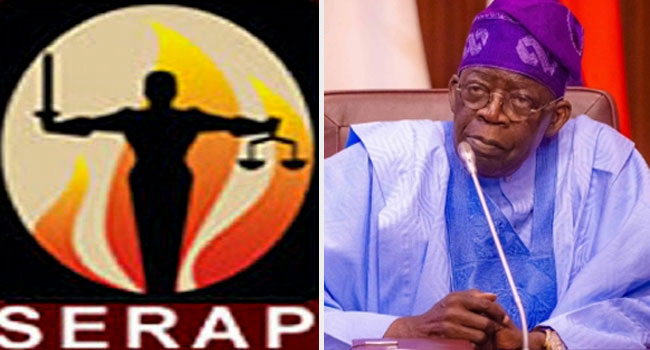
The Socio-Economic Rights and Accountability Project (SERAP) has voiced serious concerns over the persistent lack of transparency and accountability in the management of loans obtained from the World Bank and China by Nigeria’s federal and state governments.
In a strongly worded statement, SERAP urged the government to take immediate action to address these issues. The organization warned that if no steps are taken within seven days of receiving their letter, they will pursue legal action to compel compliance in the public interest.
SERAP highlighted longstanding allegations of corruption and mismanagement related to the spending of loans from the World Bank and China by Nigeria’s 36 states and the Federal Government. These allegations, SERAP argued, have severely undermined efforts to tackle widespread poverty and economic inequality across the country, including in the Federal Capital Territory.
Quoting Section 15(5) of the Nigerian Constitution, which mandates the government to “abolish all corrupt practices and abuse of power,” SERAP emphasized that the government is constitutionally and legally bound to investigate and prosecute these allegations. The organization also noted that the Constitution and international human rights treaties to which Nigeria is a signatory impose obligations on the government to ensure justice and provide effective remedies for victims of corruption.
SERAP further stressed that the mismanagement of these loans has left many impoverished citizens struggling to meet their basic survival needs. The organization underscored that preventing corruption in the spending of World Bank and Chinese loans is a matter of significant public interest, and that accountability in the management of these funds is crucial.
The organization cited specific examples, including a $1.5 billion loan approved by the World Bank in December 2020 to support Nigeria’s 36 states and Abuja in their COVID-19 recovery efforts and poverty reduction initiatives. The loan is intended to enhance access to basic education, quality water and sanitation services, improve primary healthcare, and expand social assistance programs, among other goals.
Additionally, SERAP referenced loans totaling $3.121 billion from China, allocated for projects such as the Nigerian Railway Modernization Project, the Abuja Light Rail Project, and the expansion of airport terminals in Abuja, Kano, Lagos, and Port Harcourt.
According to the Debt Management Office, Nigeria’s total public debt stock surged by ₦24.33 trillion in just three months, rising from ₦97.34 trillion ($108.23 billion) in December 2023 to ₦121.67 trillion ($91.46 billion) by March 31, 2024. This debt includes both external and domestic loans obtained by the Federal Government, the 36 state governments, and the Federal Capital Territory.
SERAP’s statement serves as a stark reminder of the urgent need for greater transparency and accountability in the management of Nigeria’s public debt and the effective use of borrowed funds to benefit its citizens.


