


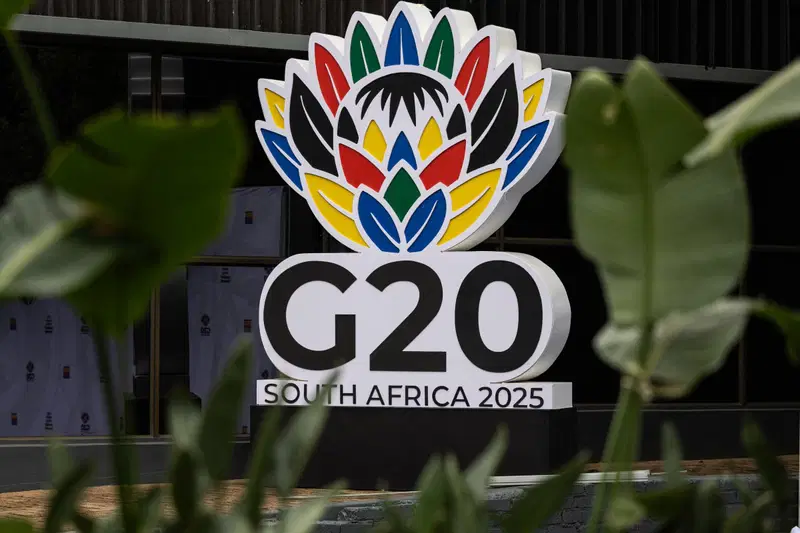
South Africa will host the first-ever G20 summit on African soil this weekend, with the debt crisis facing developing nations high on the agenda.
Developing countries now carry $31 trillion in global debt—double their share from 2010—according to UNCTAD, the UN body for integrating developing nations into the global economy. African economies, with young and growing populations, face urgent demand for financing education, healthcare, and jobs, but mounting deficits are turning into unsustainable debt.
Public debt in sub-Saharan Africa stands at 58.5 percent of GDP this year, far below levels in advanced economies such as France (117%), Japan (230%), and the United States (125%). Yet between 2021 and 2023, African governments spent an average of $70 per person on interest payments—more than they spent on education ($63) or health ($44), highlighting structural fiscal weaknesses, including low tax revenue and trade deficits.
In 2022, tax revenues averaged 16 percent of GDP in Africa, compared with 32 percent in advanced economies, according to OECD data. “Africa doesn’t produce what it consumes,” noted economist Nubukpo, underscoring the continent’s dual deficit problem.
Experts argue that stronger domestic tax systems must be paired with a fairer international financial framework. Osita Chidoka, head of Nigeria’s Athena Centre for Policy and Leadership, told AFP: “No country can tax or cut its way out of this crisis alone. Africa must grow out of debt, supported by a fairer global financial system.”
Credit rating systems also exacerbate the challenge. A 2023 UNDP report estimated that how major agencies score African countries costs the continent $74.5 billion in lost annual financing—roughly equal to its yearly infrastructure needs. In response, the African Union plans to launch its own rating agency next year, aiming to improve transparency and reduce bias.
The changing profile of creditors adds complexity. Between 2010 and 2023, private lenders’ share of low-income country debt rose from 6 to 19 percent, making restructuring slower and more difficult. Western governments fear debt relief could be redirected to China, while Beijing worries it could go to private bondholders, creating a stalemate described by David McNair of the One Campaign as a “Spiderman meme” of finger-pointing.
The G20 is being urged to champion faster and more robust frameworks for African debt resolution. South Africa’s Institute of International Affairs has proposed laws requiring private creditors to participate in restructuring talks, while previous G20 presidencies have called for multilateral development banks like the World Bank and African Development Bank to expand lending on more favorable terms.