






By Ayomide Otitoju
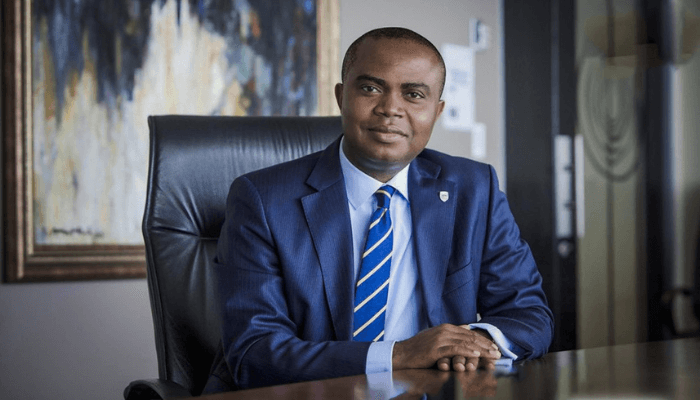
began as a week of optimism for Stanbic IBTC Holdings Plc has quickly turned into a credibility test, as the financial services giant faces regulatory sanctions barely 24 hours after unveiling its new Group Chief Executive Officer, Mr. Chukwuma Nwokocha.
On October 2, 2025, the group formally announced Nwokocha’s appointment as substantive GCEO — a move widely viewed by investors as a sign of stability and continuity. The market initially responded positively, with the bank’s share price rising modestly in early Thursday trading.
However, the optimism was short-lived. The following day, the Securities and Exchange Commission (SEC) fined Stanbic IBTC Capital Limited, a subsidiary of the group, ₦50.15 million for what it described as the “unauthorized use of digital distribution channels” during GTCO’s recent public offer.
According to the SEC, the investment arm of the bank distributed offer documents electronically without prior regulatory approval — a violation that has raised serious compliance concerns across the group.
While the fine may appear modest in financial terms, analysts say the reputational damage is far more significant, especially given Stanbic IBTC’s strong emphasis on digital innovation and regulatory prudence.
“This incident highlights a worrying disconnect between Stanbic’s push for fintech-led expansion and its adherence to regulatory frameworks,” a Lagos-based market analyst said.
The development comes at a sensitive time for the bank, coinciding with Nwokocha’s assumption of office. Market watchers warn that the episode could invite closer regulatory scrutiny and delay ongoing initiatives in the group’s investment and capital markets divisions.
Despite management’s efforts to downplay the matter, investor sentiment has been shaken. Stanbic IBTC’s share price closed flat at ₦109.00 on October 3, erasing earlier gains tied to the leadership announcement. Though the stock remains above its 50-day moving average of ₦101.43, analysts say the lack of upward momentum reflects growing caution among investors.
Some market participants are reportedly adopting a “wait-and-see” stance, pending the bank’s next steps to strengthen internal controls and reassure regulators.
The controversy also threatens to overshadow Stanbic IBTC’s upcoming Q3 2025 earnings report, which was expected to highlight Nwokocha’s strategic direction. Instead, attention has shifted to how management will restore confidence, manage regulatory relationships, and prevent future compliance lapses.
As the group moves into the final quarter of 2025, the challenge before its new leadership is clear — to turn a moment of turbulence into a test of resilience. How effectively Stanbic IBTC responds may determine whether this episode becomes a brief misstep or a deeper reflection of governance vulnerabilities within one of Nigeria’s most respected financial institutions.