
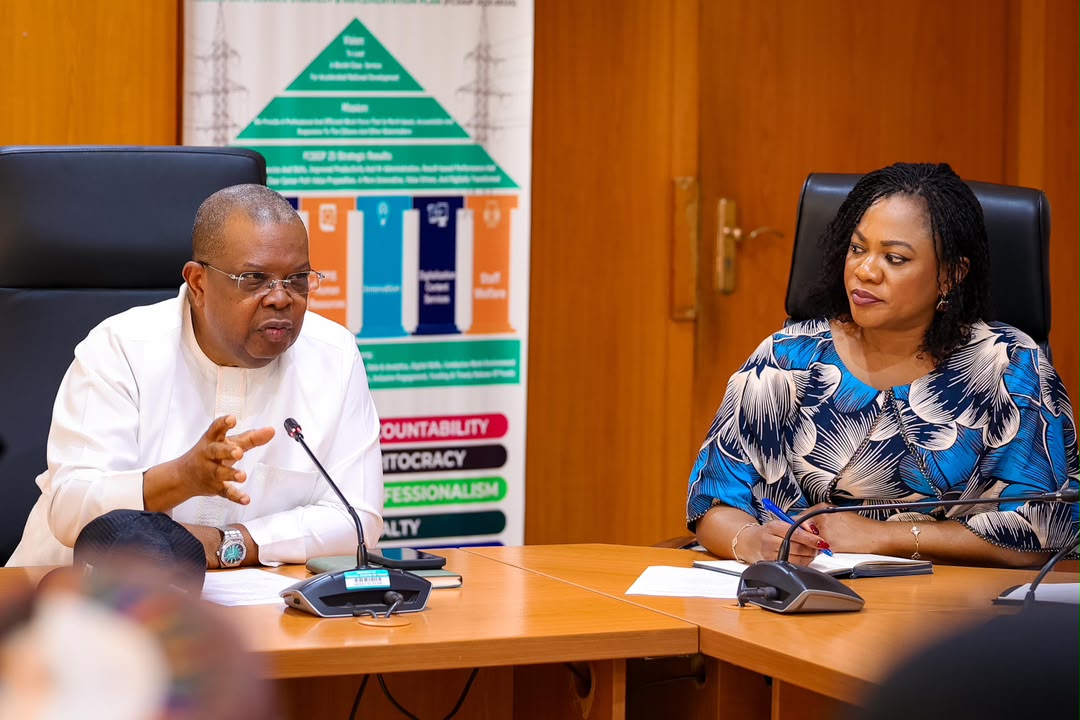








By Ayomide Otitoju
The Chairman of the National Tax Policy Implementation Committee (NTPIC), Joseph Tegbe, has said the success of Nigeria’s newly enacted tax reform framework will depend more on disciplined implementation than on the ambition of the legislation.
Speaking at the 2026 Leadership Retreat of the Nigeria Revenue Service (NRS), Tegbe noted that Nigeria’s tax reform drive has reached a critical stage where effective execution will determine long-term fiscal sustainability.
He observed that Nigeria’s tax-to-GDP ratio remains among the lowest for major economies, limiting fiscal flexibility and increasing vulnerability to oil price volatility. With rising public expenditure pressures, he stressed that sustainable domestic revenue mobilisation has become central to macroeconomic stability.
According to Tegbe, the passage of four new tax laws marks only the beginning of a broader reform agenda. He described the reforms as a systemic overhaul of Nigeria’s fiscal architecture rather than a routine policy adjustment, adding that credibility in implementation—not legislative design—will ultimately define success.
He characterised the NRS as the nation’s “Revenue System Integrator,” saying outcomes will reflect the strength of an interconnected ecosystem that includes policy clarity, consistent enforcement, digital infrastructure, efficient dispute resolution and intergovernmental coordination.
Tegbe emphasised that tax policy must serve as an enabler of governance, anchored on simplicity, equity, predictability and scalability. These principles, he said, are essential for boosting voluntary compliance, reducing operational bottlenecks and strengthening investor confidence.
He warned that ad-hoc policy shifts or inconsistent implementation could erode reform momentum and discourage investment, which thrives on predictable rules. Structured sequencing, clear transition frameworks and sustained engagement between policymakers and administrators, he added, are critical to preserving reform credibility.
The NTPIC chairman further argued that revenue reform must adopt a whole-of-government approach, leveraging robust taxpayer identification systems, integrated financial data, efficient dispute resolution mechanisms and coordinated action across federal and subnational levels. Such integration, he said, would curb leakages, eliminate multiple taxation and enhance public trust.
Tegbe also broadened the definition of reform success beyond revenue growth, noting that durable progress should be measured by higher voluntary compliance rates, reduced administrative costs, fewer disputes, faster resolution timelines and stronger taxpayer confidence.
“Sustainable revenue performance is built on trust and efficiency, not enforcement intensity,” he said.
With the legislative framework now in place, Tegbe said Nigeria’s focus has shifted to delivery, stressing that consistency, coherence and discipline in execution will determine whether the reforms translate into lasting fiscal resilience and sustainable economic gains.