







By Ayomide Otitoju
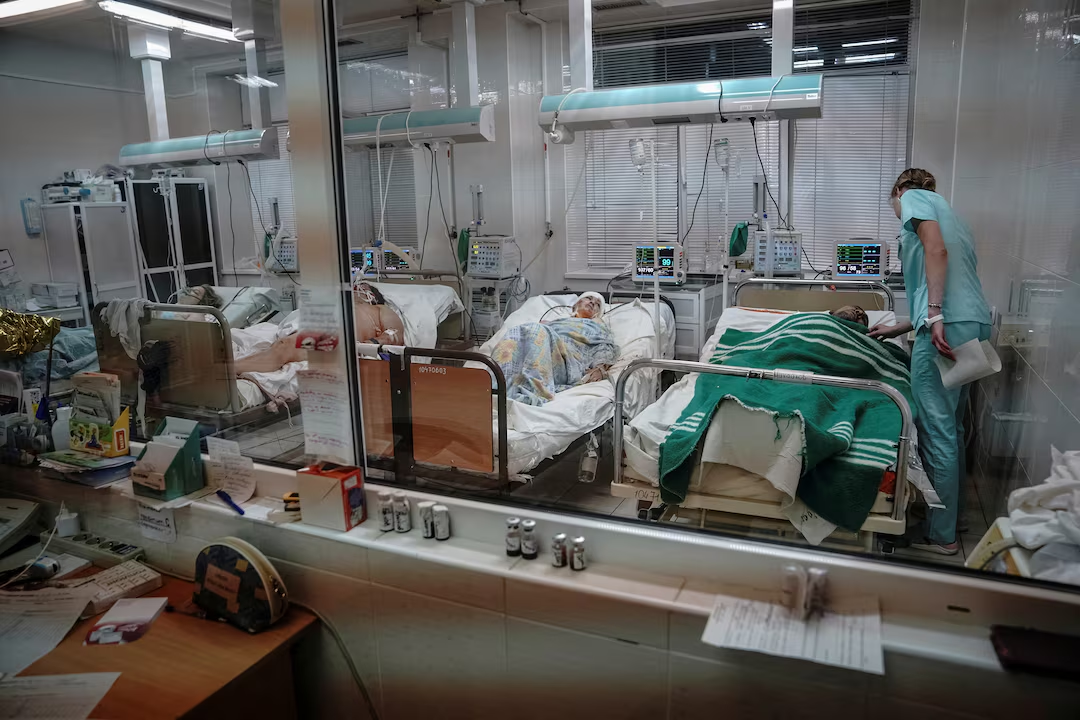
As Ukraine enters the fifth year of full-scale war, attacks on health care surged by nearly 20% in 2025 compared to 2024, according to the World Health Organization (WHO). Since Russia’s invasion on February 24, 2022, WHO has documented at least 2,881 attacks on medical facilities, health workers, ambulances, and warehouses, putting immense pressure on the country’s health system.
The conflict has left health services strained on two fronts: direct attacks on health care and the cascading effects of strikes on civilian infrastructure, including power plants critical to the country’s energy grid. WHO’s December 2025 assessment found that 59% of people in frontline areas reported their health as poor or very poor, compared to 47% in non-frontline regions.
“After four years of war, health needs are increasing, but many people are unable to get the care they need, in part because hospitals and clinics are routinely attacked,” said WHO Director-General Tedros Adhanom Ghebreyesus. “Ultimately, the best medicine is peace.”
In 2025, WHO provided medical supplies, service delivery, and capacity-building support to 1.9 million people, prioritizing frontline and hard-to-reach areas. Mental health needs are particularly acute, with 72% of surveyed Ukrainians reporting anxiety or depression, yet only one in five seeking help. Cardiovascular disease is also rising, with one in four experiencing dangerously high blood pressure, while 8 in 10 report difficulty accessing essential medicines.
Attacks on health care peaked in Q3 2025, with 184 incidents resulting in 12 deaths and 110 injuries. Medical warehouses were particularly targeted, tripling disruptions to logistics and supply chains compared to 2024. Over the course of the war, 233 health workers and patients have been killed, and 930 injured.
Winter 2025–2026 has compounded the crisis, with repeated strikes on energy infrastructure leaving millions without heat, electricity, or water. A January attack in Kyiv left nearly 6,000 buildings without heat in subzero conditions, forcing an estimated 600,000 residents to flee.
Dr Jarno Habicht, WHO Representative to Ukraine, described the cascading effect: “A heating station is struck, water pipes freeze and burst, homes flood with ice. Repairs are made, then the next attack starts the cycle over again. Behind every failure are families, elderly residents, and health-care workers trying to save lives under extreme conditions.”
War-related trauma injuries have increased demand for surgery, blood products, mental health care, and rehabilitation. Yet access remains limited: only 4% of hospitals provide inpatient rehabilitation, and just 3% offer prosthetics or assistive devices. Medicines remain scarce, with 80% of Ukrainians reporting difficulties obtaining them due to cost, closures, or security risks.
WHO’s 2025 response included:
Crisis response: Delivered trauma care and supplies to 954 facilities, supported over 1,200 medical evacuations, and reached 131 hard-to-reach locations.
Recovery: Sustained primary health care, noncommunicable disease treatment, and mental health services for displaced populations.
Rehabilitation: Rebuilt damaged facilities, installed modular clinics, and trained over 2,500 health workers.
WHO also supplied 284 generators to health facilities across 23 oblasts. For 2026, the organization is appealing for US$42 million to sustain operations and ensure care for 700,000 people.


