







By Ayomide Otitoju
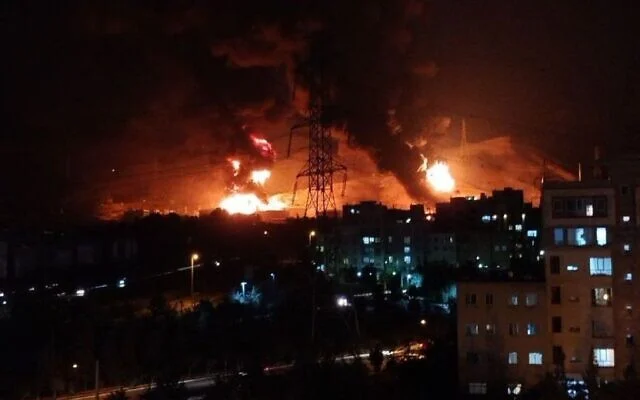
A fresh wave of Israeli airstrikes struck Tehran overnight, including a direct hit on the headquarters of Iran’s state television broadcaster, reportedly killing three people, as hostilities between Israel and Iran entered a fifth consecutive day.
The Israeli military confirmed it had launched coordinated attacks on multiple missile and drone facilities in western Iran, targeting surface-to-surface missile sites, surface-to-air launchers, and UAV storage depots. Footage released by Israel’s defense forces showed the destruction of missile launchers, as tensions continued to spiral.
The retaliatory air campaign sparked renewed missile launches from Iran, triggering air raid sirens across central Israel, including in Jerusalem and Tel Aviv. Loud explosions were heard over both cities, according to AFP correspondents on the ground. Authorities later confirmed that missile fragments landed in Tel Aviv, causing structural damage but no casualties. Emergency services responded to fires reported in Herzliya, a coastal city north of Tel Aviv, following a separate rocket strike.
In a statement, the Israeli army said, “Sirens sounded in several areas across Israel following the identification of missiles launched from Iran. The air force is actively intercepting and striking to eliminate the threat.”
The surge in violence has prompted global concern, with calls for de-escalation largely unheeded. The crisis began Friday when Israel launched a large-scale aerial offensive against Iranian military and nuclear facilities — a move it said was aimed at halting Iran’s alleged nuclear weapons ambitions, which Tehran denies.
Despite rising international alarm, including from G7 leaders, both nations appear entrenched in their positions. Iranian Revolutionary Guards on Monday vowed the attacks would continue “without interruption until dawn,” while Israeli Prime Minister Benjamin Netanyahu declared his forces were dismantling Iran’s military leadership “one after the other.”
“This is changing the face of the Middle East and could bring profound change within Iran itself,” Netanyahu said in an interview.
At least 24 Israelis have been killed and hundreds wounded in the latest round of hostilities, according to Israel’s prime minister’s office. Iran reported 224 deaths from Israeli strikes as of Sunday, including several senior military officers, nuclear scientists, and civilians. An updated toll has not yet been released.
The escalation comes amid U.S. President Donald Trump’s abrupt departure from the G7 summit in Canada. After initially calling for negotiations, Trump issued a stark warning via his Truth Social platform: “Everyone should immediately evacuate Tehran!” He later dismissed claims he was working on a ceasefire, saying the reason for his return to Washington was “much bigger than that.”
“Publicity-seeking President Emmanuel Macron… mistakenly said I left the G7 to work on a ‘cease fire.’ Wrong!” Trump posted. “Stay tuned!”
The U.S. has refrained from direct involvement in the conflict but announced the redeployment of the USS Nimitz aircraft carrier from Southeast Asia to the Middle East. Secretary of Defense Pete Hegseth confirmed additional U.S. capabilities were being moved into the region.
Meanwhile, U.S. Ambassador to Israel Mike Huckabee confirmed that a missile strike lightly damaged a building used by the American embassy in Tel Aviv. The U.S. State Department has since advised all Americans to avoid travel to Israel.
Diplomatic efforts appear frozen. Iranian Foreign Minister Abbas Araghchi reiterated Monday that Tehran would not engage in talks under attack.
“Unless there is a total cessation of aggression against us, our responses will continue,” he said, while also noting that “one phone call from Washington to muzzle someone like Netanyahu may pave the way for diplomacy.”
A senior U.S. official told AFP that Trump personally intervened to prevent an Israeli assassination attempt on Iran’s Supreme Leader, Ayatollah Ali Khamenei. Asked about the allegation in a U.S. television interview, Netanyahu declined to deny it, saying only, “It’s not going to escalate the conflict; it’s going to end it.”
At the G7 summit, world leaders called for calm and reaffirmed that “Iran can never have a nuclear weapon,” urging a broader resolution of hostilities in the region, including a ceasefire in Gaza. China also appealed to both Israel and Iran to “immediately take measures to cool down the tensions.”
For now, the cycle of retaliatory strikes continues with no clear end in sight, raising fears of a broader regional conflict with global implications.