




By Ayomide Otitoju
During the 66th Annual Conference of the Nigerian Economic Society (NES) in Abuja, African economists and development leaders emphasized the urgent need for sweeping governance reforms, enhanced domestic resource mobilization, and innovative partnerships to promote economic transformation in the continent’s transition states.
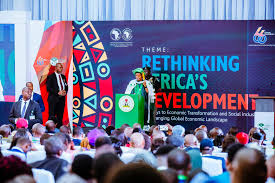
The call to action was made at a high-level Policy Dialogue organized by the African Development Institute (ADI) of the African Development Bank Group (AfDB). Themed “Driving Africa’s Economic Transformation in Transition States: The Role of Capacity Development and Knowledge Management,” the session was moderated by Chidiebere Ibe, Chief Capacity Development Officer at ADI, and attracted hundreds of delegates from across Africa and beyond, including leading economists, policymakers, academics, students, and international development partners.
Africa’s transition states represent its most vulnerable economies, grappling with a myriad of political, economic, security, and environmental challenges, and seeking increased stability and resilience.
Opening the dialogue, Abdul Kamara, Director General for the Nigeria Country Department at the African Development Bank, highlighted the continent’s imperative to accelerate growth to 7% annually and achieve a per capita GDP growth of 3.5% for four to five decades to reach the African Union’s Agenda 2063 targets.
Kamara stated, “Africa requires $811 billion annually to achieve inclusive growth and sustainable development. However, there exists a funding gap of about $680 billion each year.” He further noted that transition states alone need $210 billion per year, facing a shortfall of $188 billion.
His remarks underscored the necessity of inclusive growth—focusing on job creation, and empowering youth and women—asserting that these elements are central to the Bank’s approach. Kamara pointed to initiatives like Nigeria’s $618 million iDICE program, aimed at enhancing innovation and supporting the creative economy.
Adding to the discussion, Eric Ogunleye, Director of the ADI, highlighted the increasing urgency of addressing fragility, with 24 African countries now classified as transition states, up from 22 in just four years. “Over 250 million Africans are directly impacted by fragility, with more than 44 million forcibly displaced by mid-2024,” Ogunleye stated, emphasizing the severe consequences of instability on growth and social outcomes.
He warned that continuing instability in regions such as the Sahel, the Horn of Africa, and the Great Lakes could jeopardize long-term development unless there is a commitment to bold reforms, improved governance, and resilience against climate threats.
Both Kamara and Ogunleye stressed that achieving sustained transformation necessitates not only financial resources but also critical investments in capacity development and knowledge management. Ogunleye remarked, “We must move away from copy-and-paste policies and instead focus on locally relevant strategies rooted in indigenous knowledge.”
Experts such as Emmanuel Owusu-Sekyere from the African Center for Economic Transformation echoed the call for reforms, asserting that conflict resolution and governance reform are prerequisites for meaningful development. He identified corruption and weak political commitment as significant obstacles, urging governments to address illicit financial flows and develop inclusive, non-partisan plans.
Adeyemi Dipeolu, a faculty member at ADI and former advisor to the Nigerian president on economic matters, addressed the continent’s low tax-to-GDP ratio and the financial repercussions of illicit financial outflows, stressing the importance of sustainable borrowing practices.
Jane Mariara, Executive Director of the Partnership for Economic Policy, pointed to declining development assistance but highlighted new opportunities in climate finance, which is anticipated to reach $137 billion in 2024. She advocated for enhanced debt management capacity and encouraged public-private partnerships for resource mobilization.
In closing, Seedwell Hove from the AfDB noted that the dialogue’s key takeaway was the foundational role of capacity development and knowledge management in achieving economic growth and transformation in Africa’s transition states. He emphasized that these elements are essential for moving from fragility to resilience and from transition to sustainable economic transformation.