




By Ayomide Otitoju
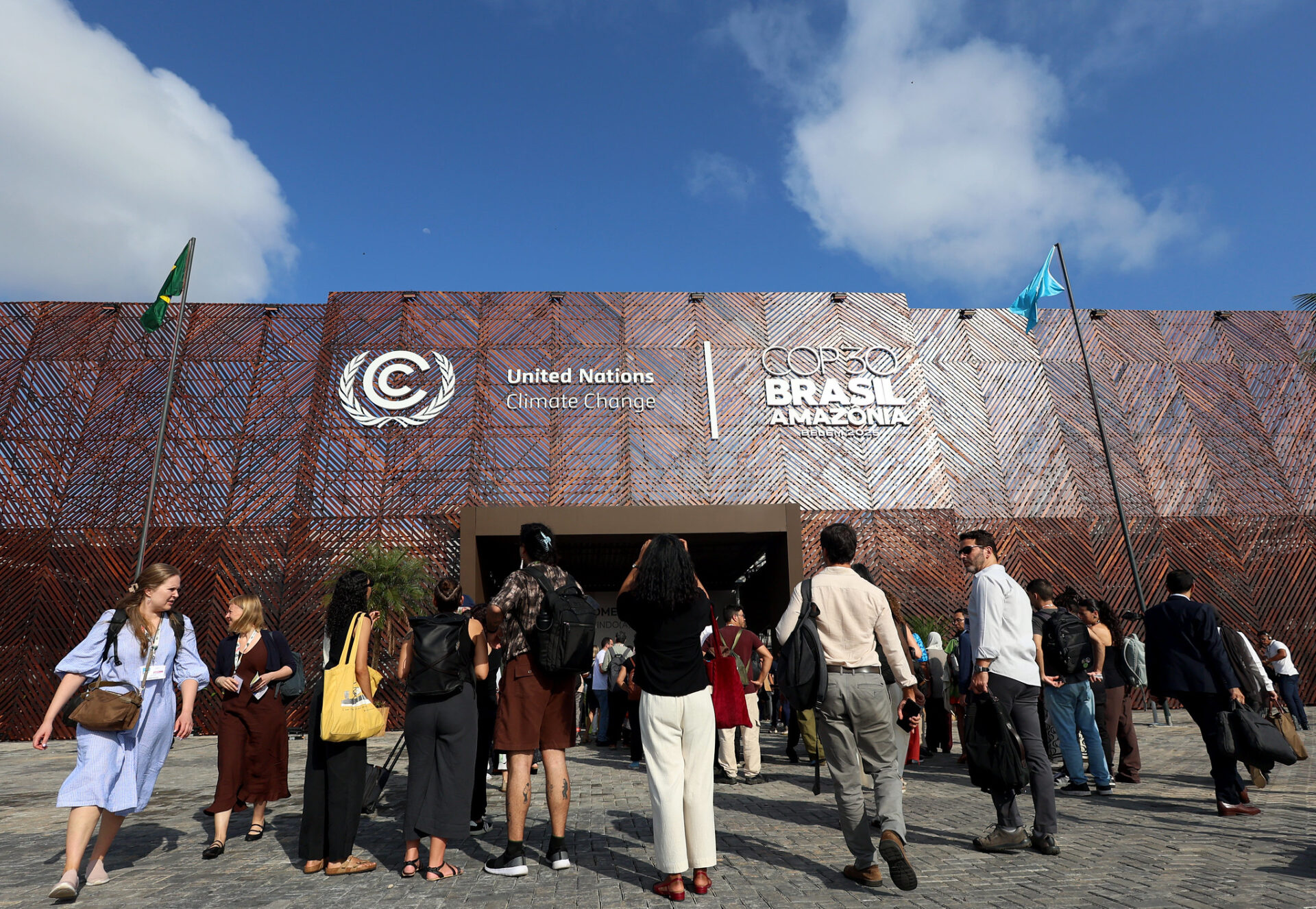
COP30 President André Corrêa do Lago has reiterated that this year’s climate summit must place “people at the centre” of global climate action. However, a coalition of fragile and conflict-affected states says more than one billion of the world’s most vulnerable people are still being excluded from critical climate finance.
In a statement released on Tuesday, the Improved and Equitable Access to Climate Finance Network (IEACF) warned that countries facing conflict and fragile governance are being “locked out” of adaptation funding, despite suffering some of the worst climate impacts.
The Network, comprising 10 fragile states including Burundi, Mauritania, Somalia and Papua New Guinea, called on COP30 and global climate funds to address what it described as “an urgent blind spot at the heart of climate finance.”
More than one billion people live in countries affected by conflict, fragility or violence. Yet in 2022, these countries received only 10% of global climate finance, despite their extreme vulnerability.
The barriers remain formidable. Yemen’s Minister of Water and Environment, Tawfiq Al-Sharjabi, speaking during a UNFCCC side event, cited “complex procedures, limited technical capacities, and the absence of flexible financial instruments” as key obstacles preventing fragile states from securing funding.
Somalia’s Minister of Environment and Climate Change, Bashir Mohamed Jama, described a stark disparity between humanitarian and climate financing. “Somalia receives just over $300 million in climate-related funding each year—less than 1% of what we need to adapt,” he said. “By contrast, humanitarian aid reaches $1.1 billion annually. It is easier to unlock finance after disasters than to invest in preventing them.”
Ongoing negotiations in Belém on scaling up global climate finance have added new urgency to the issue. Mauricio Vazquez, head of policy for risks and resilience at ODI Global, urged negotiators to ensure that “ambition to unlock an additional $1.3 trillion” is matched by efforts to direct existing funds to the communities most in need.
Formed in 2024, the IEACF Network advocates for improved access to climate finance for fragile states. On Tuesday, it announced three new members: Mauritania, Papua New Guinea and South Sudan.
The Network is pressing climate funds and development banks to reform allocation systems to better reach crisis-affected regions. It also wants a shift toward long-term resilience projects rather than reactive, post-disaster support.
Climate adaptation is a central focus at COP30. Governments in Belém are working to finalise indicators for the Global Goal on Adaptation, a UNFCCC framework for tracking efforts to build climate resilience.
But experts warn that progress will remain limited unless fragile and conflict-affected states are fully included. Asif R. Khan, director at the UN Department of Political and Peacebuilding Affairs and chair of the Climate Security Mechanism, noted that most UN peace operations are deployed in climate-stressed regions struggling to manage climate shocks.
“Climate change is amplifying pressures that fuel conflict and displacement,” Khan said, citing rising tensions over water access in parts of West Africa. Supporting fragile states, he added, requires joined-up analysis, long-term partnerships and finance that reflects conditions on the ground.
Several donor governments are also pushing for closer integration of climate adaptation, development and peacebuilding.
Ireland’s Minister of State, Neale Richmond, said the country’s aid policy prioritises “reaching the furthest behind first” and emphasises building peace alongside climate resilience. “We recognise the need to forge a future where peace and security thrive alongside a sustainable and resilient planet,” he said.
As COP30 continues, calls are growing for the global climate finance system to better serve the people facing the most severe and overlapping climate and security risks.