








By Ayomide Otitoju
JMG Limited has commissioned hybrid solar power systems at three NIPCO Plc fuel stations, enabling the outlets to significantly reduce diesel dependence and achieve annual energy cost savings of over ₦44 million.
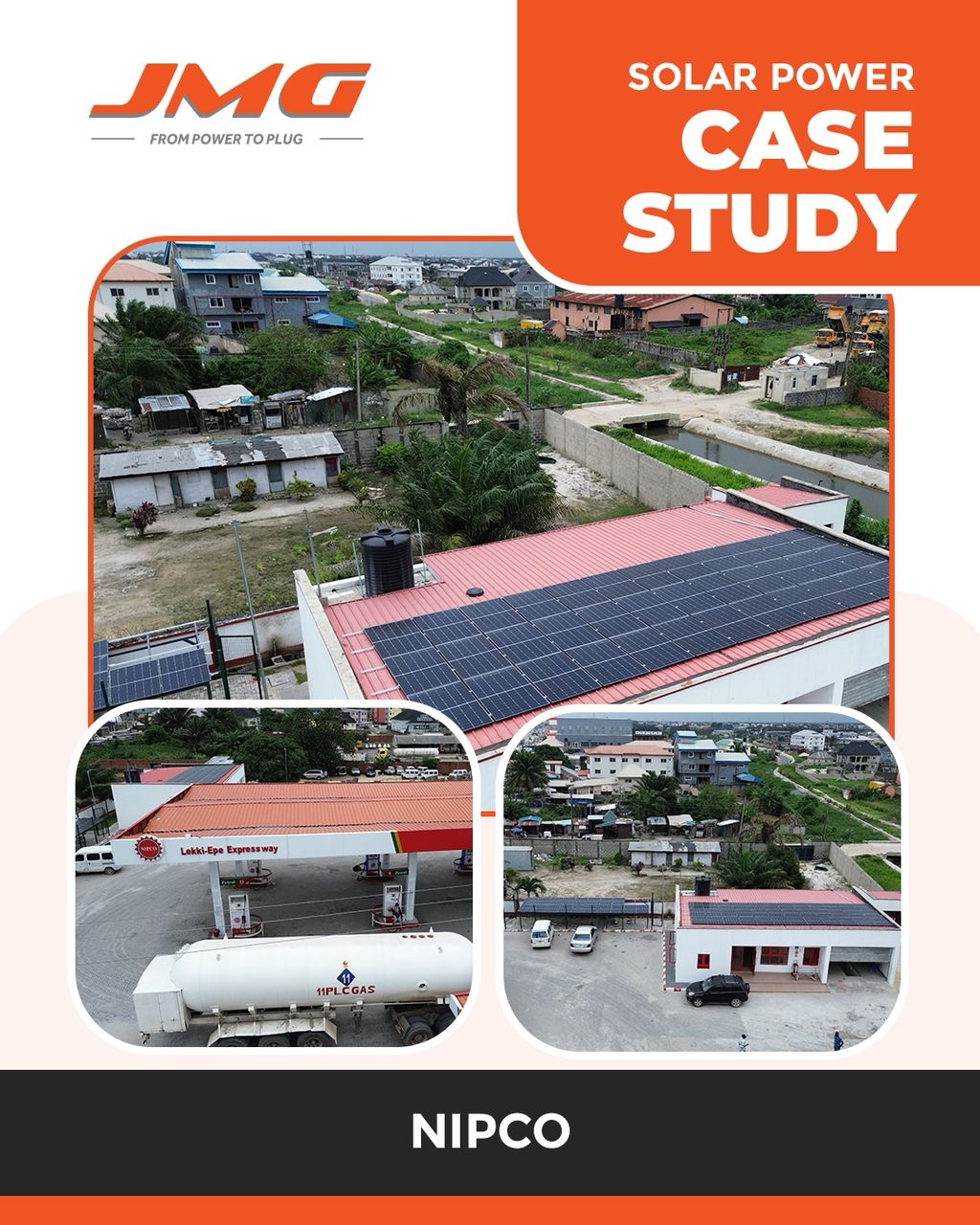
The installations, completed between May and June 2025, were carried out at NIPCO stations in Gwagwalada, Lekki and Mpape. The systems combine high-efficiency solar panels, lithium battery storage and smart hybrid inverters to deliver uninterrupted power for fuel dispensing, lighting and administrative operations.
According to JMG, the stations have operated largely without reliance on grid electricity or generators since commissioning, marking a major step in NIPCO’s transition to cleaner and more cost-effective energy solutions.
Speaking on the project, Abbass Hussein, Head of JMG’s Hybrid Solar Division, said the initiative demonstrates that energy-intensive sectors such as fuel retail can adopt clean and resilient power systems without compromising performance.
“The three NIPCO stations now run on advanced hybrid solar systems that provide silent, uninterrupted electricity. Since commissioning, they have recorded zero grid or generator usage, delivering significant savings and emissions reductions,” Hussein said.
He added that the installations are expected to generate a combined 88,535 kWh annually, translating to ₦44.4 million in energy cost savings and a reduction of 43.8 tonnes of carbon dioxide emissions each year.
At the station level, the Gwagwalada outlet records an estimated solar output of 42,450 kWh per year, saving about ₦15.6 million annually, while Lekki generates 3,635 kWh with savings of ₦12 million. The Mpape station also produces about 42,450 kWh annually, yielding savings of ₦16.8 million. Each location is equipped with tailored hybrid inverter systems and scalable lithium battery storage to meet site-specific energy demands.
Idoko Jacob, Station Manager at NIPCO Gwagwalada, said the solar systems have met daily energy needs during favourable weather conditions, with minimal generator support required during extended cloudy periods.
“Since commissioning, the solar systems have fully powered our operations on bright days. We are impressed by the reliability and the savings achieved,” he said.
JMG noted that the hybrid systems allow the stations to operate independently of the grid for most of the day, with batteries storing excess solar energy and smart inverters ensuring seamless power transitions. The company said the project provides a practical model for businesses seeking to cut energy costs while reducing environmental impact.