
By Ayomide Otitoju
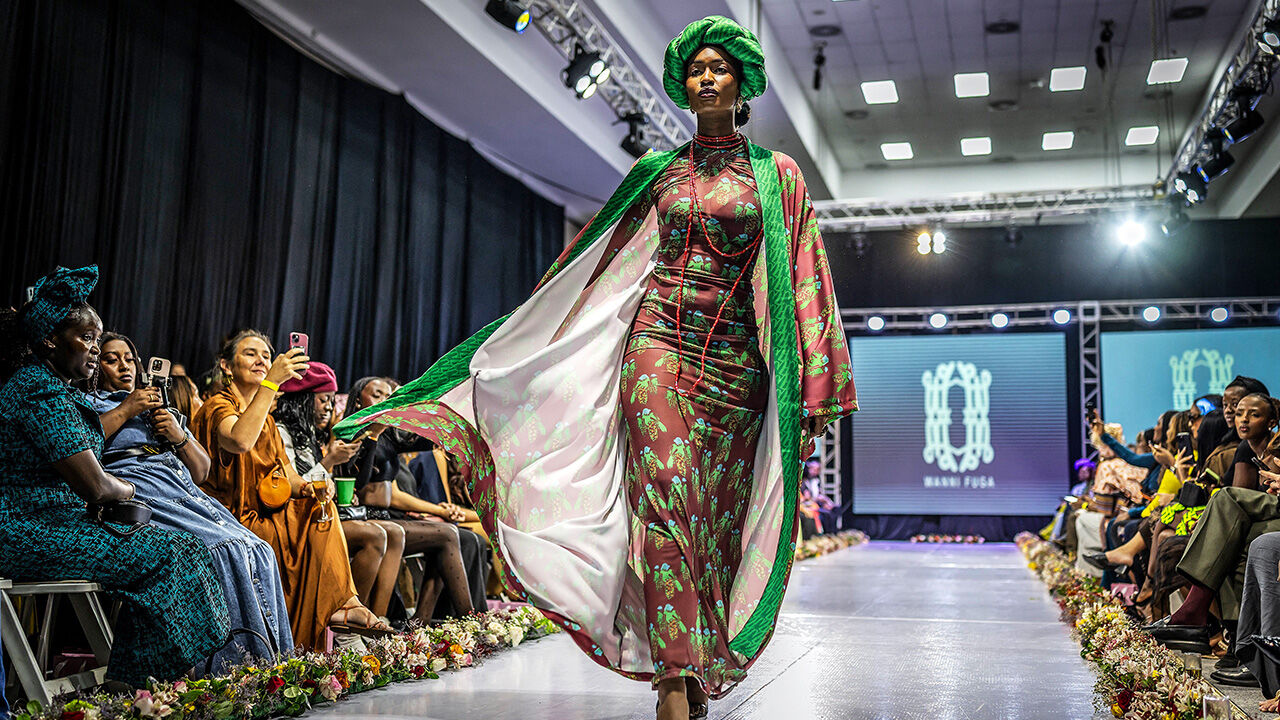
Nigeria Fashion Week has brought bold, avant-garde designs to Abuja, with Nigerian and international designers showcasing elaborate garments and colourful textiles on the runway.
The fashion event, which ends on Sunday, moved from Lagos to the nation’s capital this year in an effort to expand Abuja’s growing creative industry and strengthen engagement between the fashion sector and government.
Models appeared in dramatic outfits featuring sculptural silhouettes, layers of fabric and shimmering patterns inspired by carnival costumes and traditional textiles.
Organisers said the decision to relocate the event was partly aimed at promoting greater collaboration between the creative industry and government.
Culture Minister Hannatu Musa Musawa, who attended a Friday runway show, said government had a role to play in creating an environment that would enable the creative sector to grow.
“Government has to be that enabling environment,” she said, pointing to the need for reforms in areas including tourism and intellectual property.
Abuja, which replaced Lagos as Nigeria’s capital in 1991, has gradually developed a creative scene of its own, hosting photography and film festivals as well as literary events.
However, the city remains significantly smaller than Lagos, Nigeria’s commercial and entertainment hub and home to major fashion, film and music industries.
Lexy Mojo-Eyes, organiser of Nigeria Fashion Week, said Abuja’s slower pace and relaxed atmosphere offered a different setting for the event.
“Abuja is slow, slow in every way. People are very laid back,” he said.
The capital has also attracted fashion businesses from Lagos. Chinwe Ezenwa, chief executive of handbag brand Le Look, opened a second factory in Abuja in 2021.
“It’s a bit of a sleepy town, but it’s picking up,” Ezenwa said.
Libyan designer Rabia Ben Barka, who participated in the fashion week, described Abuja as clean and organised during her first visit to Nigeria.
Her collection featured shimmering dresses and structured silhouettes, while another menswear look combined a metallic silver-and-black pinstripe suit with heeled leather shoes.
Despite the growing creative activity, questions remain about whether Abuja can develop the workforce and infrastructure required to sustain a larger fashion industry.
High housing costs have pushed many residents towards the outskirts of the city, while government redevelopment projects have also drawn criticism over the demolition of green spaces, farms and informal outdoor restaurants.
The event also encountered a familiar Nigerian challenge when a power outage briefly plunged the venue into darkness as models prepared backstage on Friday.
Electricity was restored shortly afterwards, prompting one attendee to joke that the disruption had made the show “very authentic”.